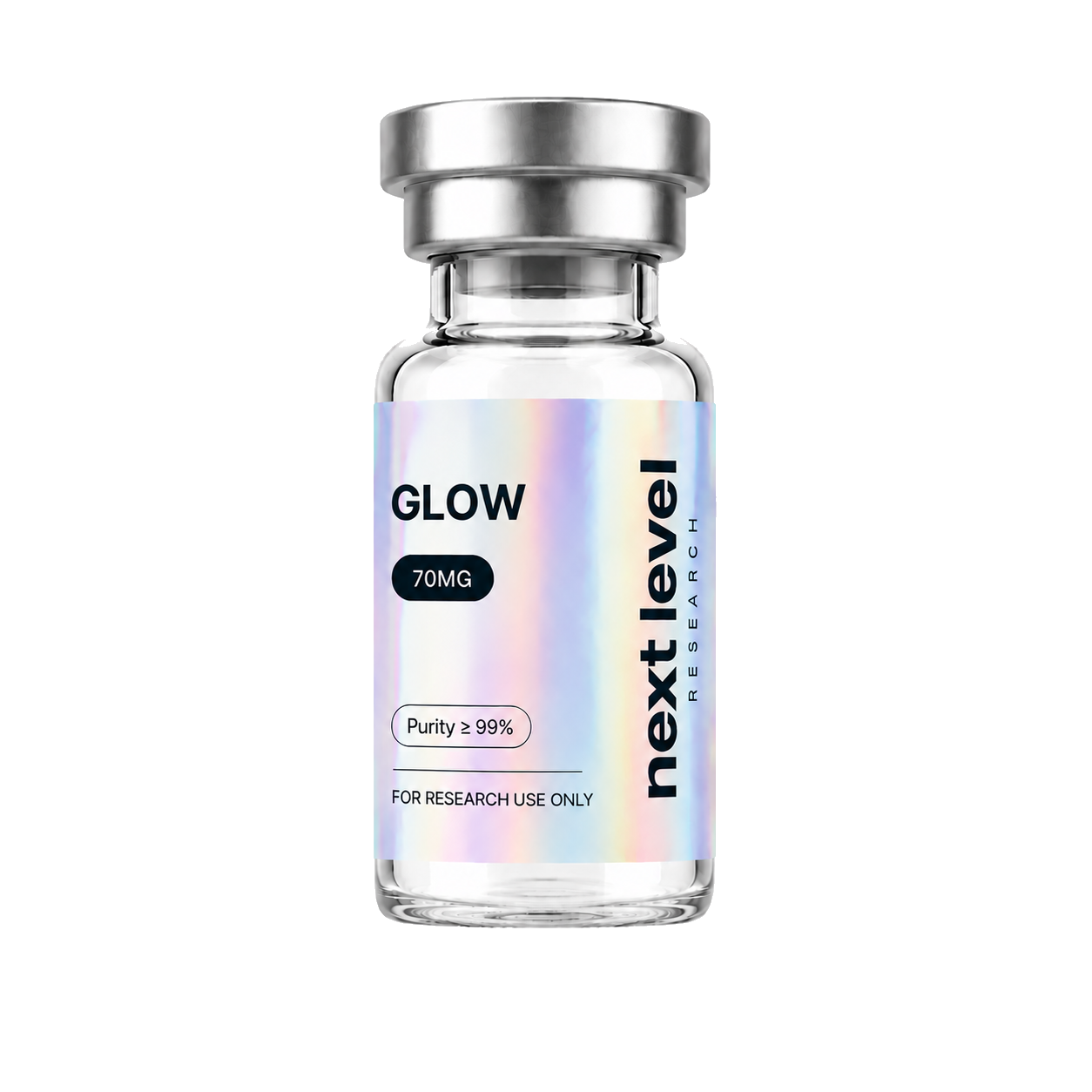
GLOW
A triple-peptide combination of BPC-157, TB-500, and GHK-Cu targeting complementary angiogenic, cellular migration, and extracellular matrix remodeling pathways in preclinical research.
Compound Profile
Overview
GLOW is a lyophilized research blend combining three peptide compounds that have been independently studied in preclinical models. BPC-157 is a 15-amino acid synthetic pentadecapeptide whose sequence is derived from a gastroprotective protein fraction; it has been investigated in cell culture and animal models for effects on angiogenic signaling, nitric oxide pathways, and cytoprotection. TB-500 is a synthetic analogue of Thymosin Beta-4 (Tβ4), an endogenous 43-amino acid peptide that regulates actin sequestration via G-actin binding; Tβ4 has been studied for roles in cellular migration, wound healing, and angiogenesis in preclinical models. GHK-Cu is a naturally occurring copper-chelating tripeptide studied for extracellular matrix remodeling and gene expression modulation in fibroblast systems. This combination is formulated as a lyophilized powder for in vitro and preclinical laboratory research only; each component targets complementary pathways in tissue biology research.
Key Facts
- BPC-157: synthetic 15-AA pentadecapeptide; investigated in rodent wound and gastroprotection models for angiogenic effects via VEGFR2 and FAK–paxillin signaling
- TB-500 (Tβ4): binds G-actin with high affinity (Kd ~0.5 µM), sequestering monomeric actin and modulating cytoskeletal dynamics in cell migration assays
- Thymosin Beta-4 is naturally expressed in most nucleated cells at high concentration; the synthetic analogue TB-500 mimics its actin-binding domain for research use
- GHK-Cu chelates Cu²⁺ with a formation constant of ~10¹⁶ M⁻¹ and has been studied for modulation of collagen, elastin, and glycosaminoglycan synthesis in fibroblast models
- All three components are independently studied in published preclinical literature; combination effects in this formulation have not been studied in controlled published trials
- Lyophilized blend; reconstitute with bacteriostatic water for in vitro use only
- For research use only — not for human or veterinary administration