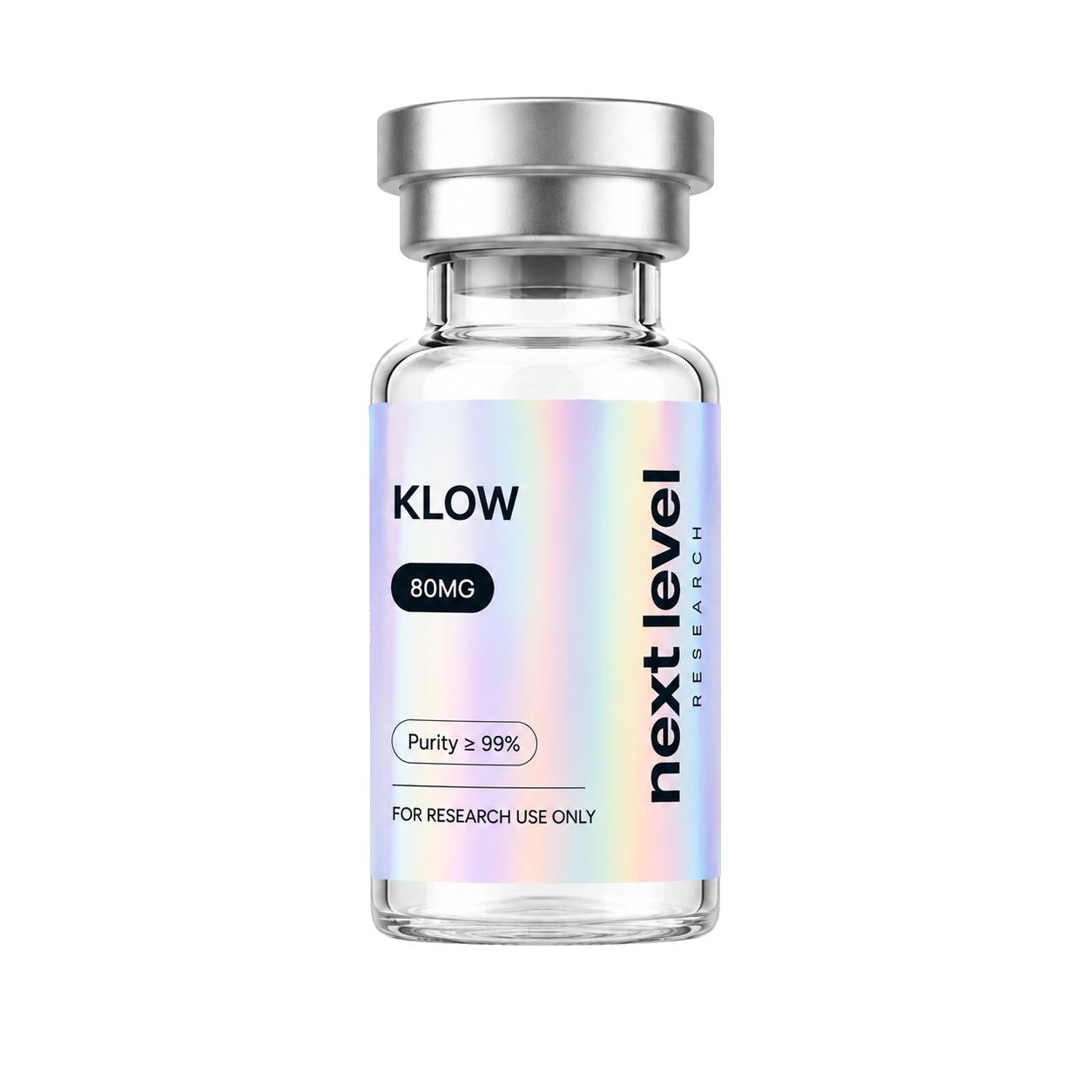
KLOW
A quad-peptide combination of BPC-157, TB-500, GHK-Cu, and KPV targeting complementary angiogenic, cellular migration, extracellular matrix remodeling, and anti-inflammatory pathways in preclinical research.
Compound Profile
Overview
KLOW is a lyophilized research blend combining four peptide compounds studied across complementary preclinical pathways. BPC-157, TB-500, and GHK-Cu are described in the GLOW entry above. The fourth component, KPV (Lysyl-Prolyl-Valine), is a tripeptide corresponding to the C-terminal sequence (residues 11–13) of alpha-melanocyte-stimulating hormone (α-MSH), an endogenous neuropeptide derived from proopiomelanocortin (POMC). KPV has been investigated in cell culture and rodent models for interactions with melanocortin receptors (specifically MC1R and MC3R) and downstream NF-κB signaling pathways implicated in inflammatory cytokine production. Studies have examined KPV in intestinal epithelial cell models and murine colitis models. This blend is formulated for in vitro and preclinical laboratory research only; controlled studies of this specific four-component combination in published literature have not been conducted.
Key Facts
- BPC-157 and TB-500 are described fully in the GLOW research entry; KPV adds a fourth mechanistic pathway to this blend
- KPV (Lys-Pro-Val) is the C-terminal tripeptide of α-MSH, a POMC-derived neuropeptide that signals through melanocortin receptors MC1R–MC5R
- KPV has been shown to inhibit NF-κB nuclear translocation and reduce pro-inflammatory cytokine secretion (IL-8, IL-6) in human intestinal epithelial cell lines in vitro
- Rodent studies have examined KPV administration in chemically induced colitis models (TNBS, DSS), with reported effects on mucosal inflammatory markers
- Melanocortin receptor signaling has been studied as a regulatory axis in intestinal immune homeostasis in preclinical research
- GHK-Cu chelates Cu²⁺ and modulates ECM gene expression in fibroblast models; combined mechanistic effects of all four components have not been characterized in controlled studies
- Lyophilized blend; reconstitute with bacteriostatic water for in vitro use only
- For research use only — not for human or veterinary administration